Loading...
R. No 2232, Rabale MIDC, Navi Mumbai 400701
priyatowingservices@gmail.com
+91 7715039334

Battery Jump Start

A dead battery can be an unexpected inconvenience, especially when you are in a hurry or stuck in an unfamiliar location. Priya Towing Service understands the urgency of such situations and provides a prompt response to ensure you are not left stranded for long. Their trained professionals arrive equipped with high-quality jump-start tools and diagnostic equipment to assess the condition of your battery and determine whether a simple jump-start will suffice or if further action is required.
In addition to standard jump-start services, Priya Towing Service takes extra precautions to prevent any damage to modern vehicle electrical systems. Newer cars have sensitive electronics that can be affected by improper jump-starting techniques, but with Priya Towing’s expertise, you can be assured that the process is carried out safely and efficiently.
Moreover, if your battery is beyond recovery, Priya Towing Service offers on-the-spot battery replacement options, providing a convenient solution to get you back on the road without the hassle of finding a replacement yourself. Whether you are stuck at home, in a parking lot, or on the roadside, Priya Towing Service is just a call away, ready to provide fast and dependable assistance.
Jump-Start a Car Using Another Vehicle’s Battery

If your car’s battery is dead, you can use another vehicle’s battery to jump-start it. This process requires jumper cables and a working car to transfer power to the dead battery. Follow these step-by-step instructions to safely jump-start your vehicle.

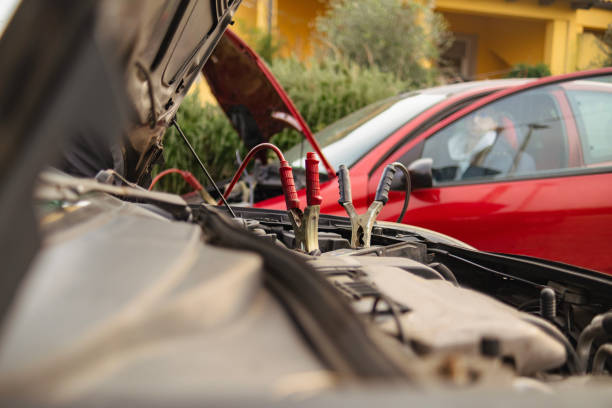
1. Position Both Vehicles Properly - Park both vehicles close enough for the jumper cables to reach but without touching each other. Turn off both engines, engage the parking brakes, and open the hoods to locate the batteries.

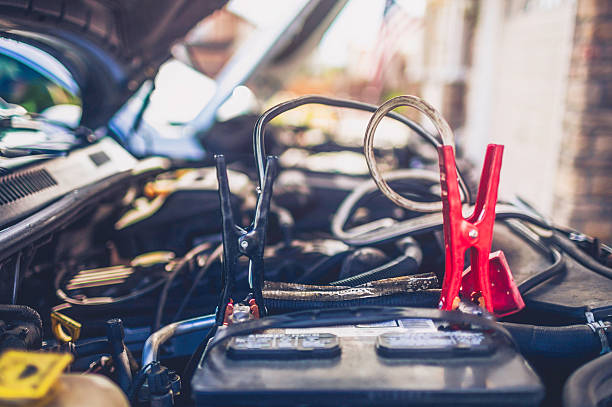
2. Identify Battery Terminals - Find the positive (+) and negative (-) terminals on both batteries. The positive terminal is usually marked with a red cover or a plus sign (+), while the negative terminal is typically black or marked with a minus sign (-).

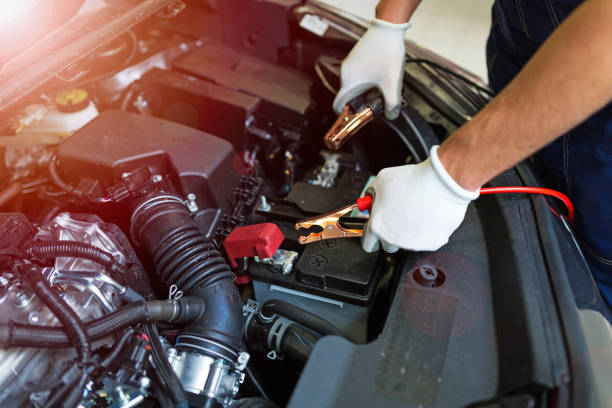
3. Connect the Jumper Cables in the Correct Order - Start by attaching one end of the red cable to the positive (+) terminal of the dead battery. Then, connect the other end of the red cable to the positive (+) terminal of the working battery. Next, attach one end of the black cable to the negative (-) terminal of the working battery. Finally, connect the other end of the black cable to an unpainted metal surface on the dead car’s engine block instead of the battery terminal. This prevents sparks and reduces the risk of explosion.

4. Start the Working Car - Turn on the car with the working battery and let it run for 3–5 minutes. Lightly press the accelerator to increase the charge flow to the dead battery.

5. Start the Dead Car - Try turning the ignition key of the dead car. If it starts, let the engine run for 5–10 minutes before disconnecting the cables. If the car doesn’t start, wait a few more minutes and try again. If it still fails, the battery may be too weak or damaged.

6. Disconnect the Jumper Cables in Reverse Order - Remove the black cable from the metal surface of the dead car first, then from the negative terminal of the working battery. Next, remove the red cable from the positive terminal of the working battery, and finally from the dead battery. Be careful to avoid the clamps touching each other while removing them.

7. Keep the Engine Running - Once the dead car starts, let it run for at least 15–30 minutes to allow the alternator to recharge the battery. Driving around for a while will help prevent the battery from draining again.

Jump-Start a Car Using Another Battery

Jump-starting a car using another battery is a simple yet effective method to revive a vehicle with a dead battery. This process involves using jumper cables to transfer power from a working battery to the dead one, allowing the car to start. First, both vehicles should be parked close to each other but not touching, with their ignitions turned off. The red (positive) cable is connected to the positive terminal of the dead battery first, then to the positive terminal of the good battery. Next, the black (negative) cable is attached to the negative terminal of the good battery and then to an unpainted metal surface on the dead car’s engine block to prevent sparks. Once connected, the working vehicle is started and left running for a few minutes before attempting to start the dead car. If successful, the cables should be removed in reverse order, and the revived car should be kept running for at least 15–30 minutes to recharge the battery. If the car does not start, the battery may be too weak or damaged and may require a replacement or professional assistance.

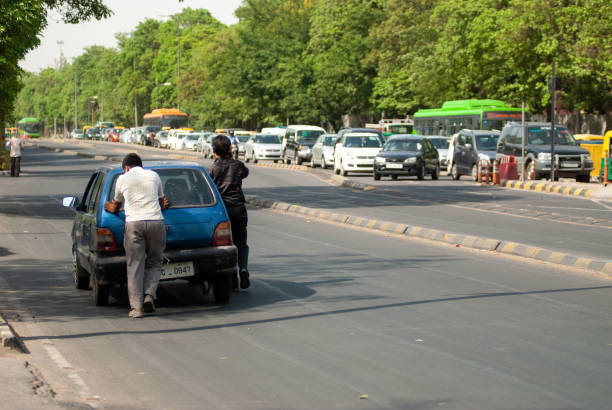
Push Car Start Vechile

Push-starting a vehicle, also known as bump-starting, is a useful technique for starting a manual transmission vehicle when the battery is dead. Priya Towing Service offers assistance in such situations, ensuring that your vehicle is safely restarted without hassle. To push-start a Priya Towing van or any other manual vehicle, first, turn the ignition key to the "ON" position and ensure all electrical accessories are turned off. Press the clutch pedal fully and shift the gear into second gear for a smoother start. With the help of a few people or a slight downhill slope, push the van forward until it reaches a speed of about 5–10 mph (8–16 km/h). Once enough momentum is gained, quickly release the clutch while pressing the accelerator lightly. If done correctly, the engine should catch and start running. Keep the engine running for a few minutes to ensure it remains stable. If the van still doesn’t start, the issue may be beyond the battery, requiring professional diagnosis. Priya Towing Service provides battery jump-start, towing, and roadside assistance, ensuring you get back on the road quickly and safely.